
How to Search Cook County Criminal Records
The Clerk of the Circuit Court online case information page at cookcountyclerkofcourt.org exposes a public docket summary for criminal cases. The Clerk warns that the online docket is not the official record and that updates may take a few days to appear. Illinois-licensed attorneys and justice partners use the CCC Portal for Criminal, County, Probate, and Domestic information.
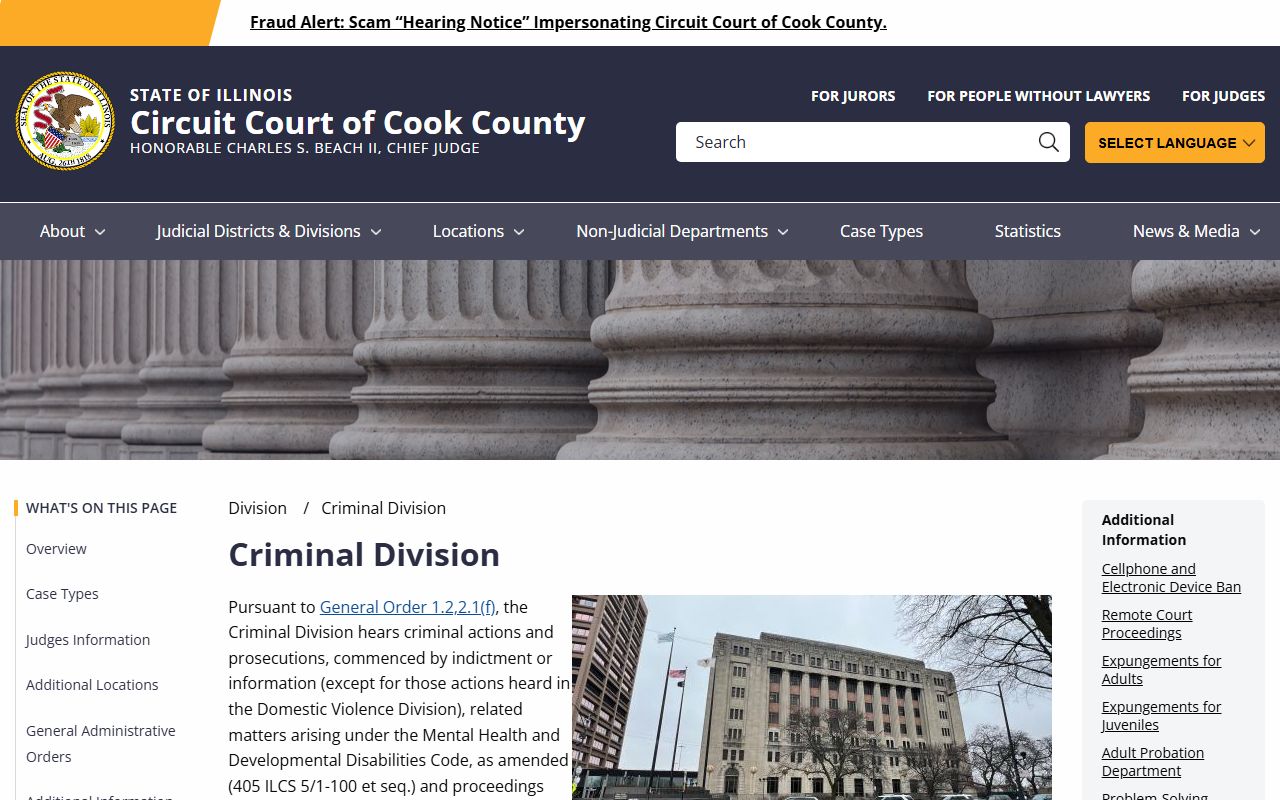
The Criminal Division's own page at cookcountycourtil.gov covers jurisdiction, the criminal courthouse location, and the Presiding Judge contact. The screenshot below shows that division page.
- Open the Clerk's online case information page.
- Choose the criminal docket and follow the link to the case search.
- Search by case number or by defendant name where the public search allows.
- Review the docket: charge, court date, status, judge, courtroom.
- For an arrest-only record (no court case yet), use the Cook County Sheriff's Individual in Custody Locator.
- For a sentenced inmate, search the Illinois Department of Corrections.
- For certified copies, file the Clerk's CCG0026 form or visit the courthouse.
Arrest records are also held by the arresting agency, including the Chicago Police Department or the local suburban police department, under FOIA. Court files belong to the Circuit Court.
Arrest Records vs Court Records in Cook County
An arrest record is created by the arresting law-enforcement agency. A court record is created when charges are filed in the Circuit Court. The two are not the same, and one can exist without the other. Illinois FOIA, 5 ILCS 140/2.15, includes specific disclosure rules for arrest reports and criminal history maintained by law enforcement.
| Arrest Record | Court Record | |
|---|---|---|
| Created by | Police, sheriff, state police | Clerk of the Circuit Court |
| Shows | Booking, charges at intake, photo | Filed charges, dispositions, sentence |
| Access | Agency FOIA request | Clerk record-request form, online docket |
| Resolution | May or may not result in charges | Open until the court enters a disposition |
Charges vs Convictions
A charge is what the prosecutor files. A conviction is what the court enters after a guilty plea or guilty verdict. Many Cook County cases end without a conviction. Supervisions, dismissals, deferred prosecutions, restorative justice agreements, and not-guilty findings all leave the public record showing a filed charge but no conviction.
| Charge | Conviction | |
|---|---|---|
| Stage | Filed by prosecutor | Entered after plea or trial |
| Outcomes | Dismissed, supervision, acquittal, conviction | Sentence: jail, prison, probation, fines |
| Eligibility for sealing | Often eligible if dismissed or acquitted | Depends on offense and waiting period |
| FCRA use | Should not be reported as a conviction | Reportable under federal rules |
Note: A charge that ends without a conviction is not the same thing as a clean record under Illinois law; the arrest record may still appear until it is expunged or sealed.
Sealed vs Expunged Records
Sealing and expungement are different remedies under the Illinois Criminal Identification Act. The Cook County Criminal Division hears expungement petitions. The Clerk's fee schedule lists a $60 expungement petition fee for Criminal and Traffic.
| Sealed | Expunged | |
|---|---|---|
| Public access | Removed from public view | Destroyed or removed from public records |
| Law-enforcement access | Available to police, prosecutors, and courts | Removed from most agency repositories |
| Typical eligibility | Many convictions, after a waiting period | Arrests with no conviction, supervisions after waiting period |
| Filing fee | $60 petition fee | $60 petition fee |
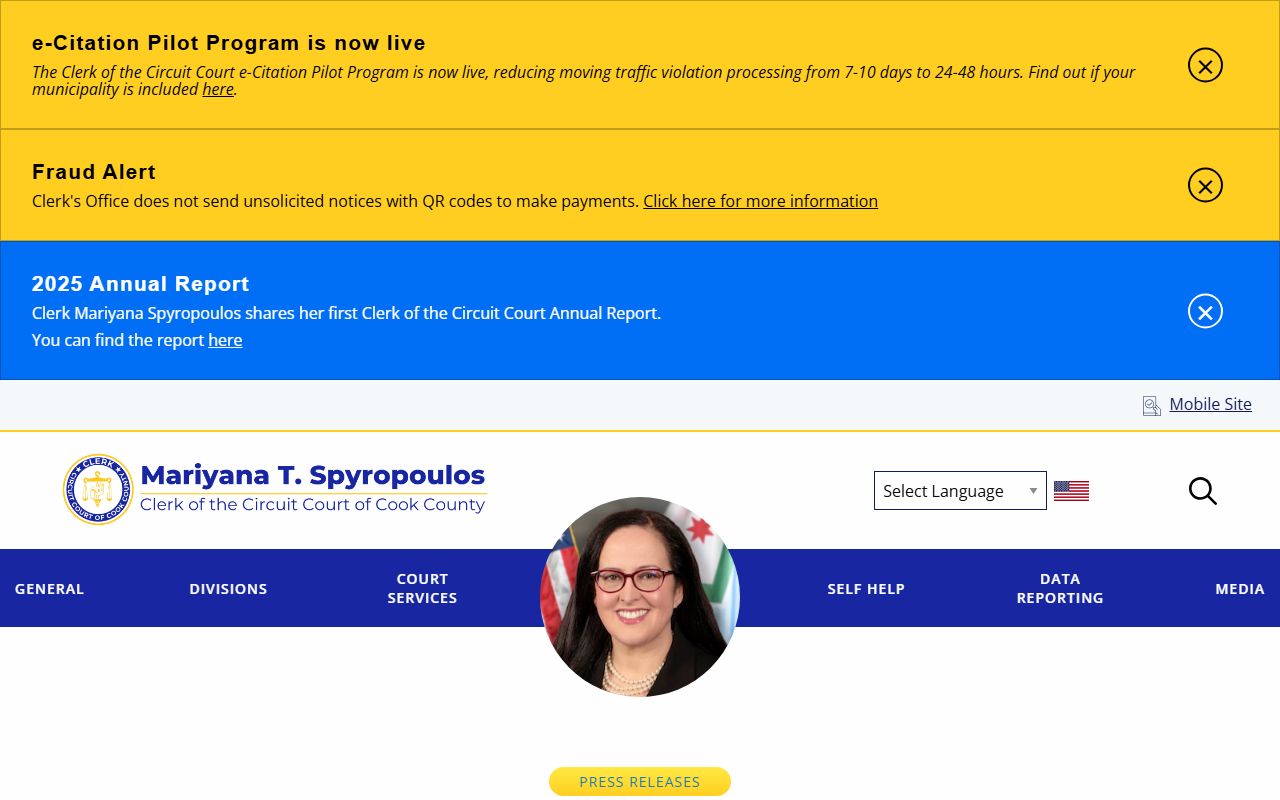
The Clerk's Second Chance Summit press release below describes a single-day event where hundreds of people filed expungement and sealing petitions.
Eligibility is fact-specific. Use the official Illinois Supreme Court standardized forms or work with Illinois Legal Aid Online or a Cook County legal aid organization.
George N. Leighton Criminal Courthouse
The Leighton Criminal Courthouse sits at 26th and California, next to the jail complex. The Criminal Division phone is (773) 674-3160 and the Presiding Judge office is Room 101. The court handles felony prosecutions started by indictment or information, related Mental Health and Developmental Disabilities Code matters, Sexually Violent Persons Commitment Act proceedings, habeas corpus and extradition in criminal matters, and arrest-record expungement petitions.
George N. Leighton Criminal Courthouse
2600 S. California Ave.
Chicago, IL 60608
(773) 674-3160
Fax (773) 674-3093
Criminal Court Administration Building
2650 S. California Ave.
Chicago, IL 60608
Criminal Division administrative offices
Restorative Justice Community Courts
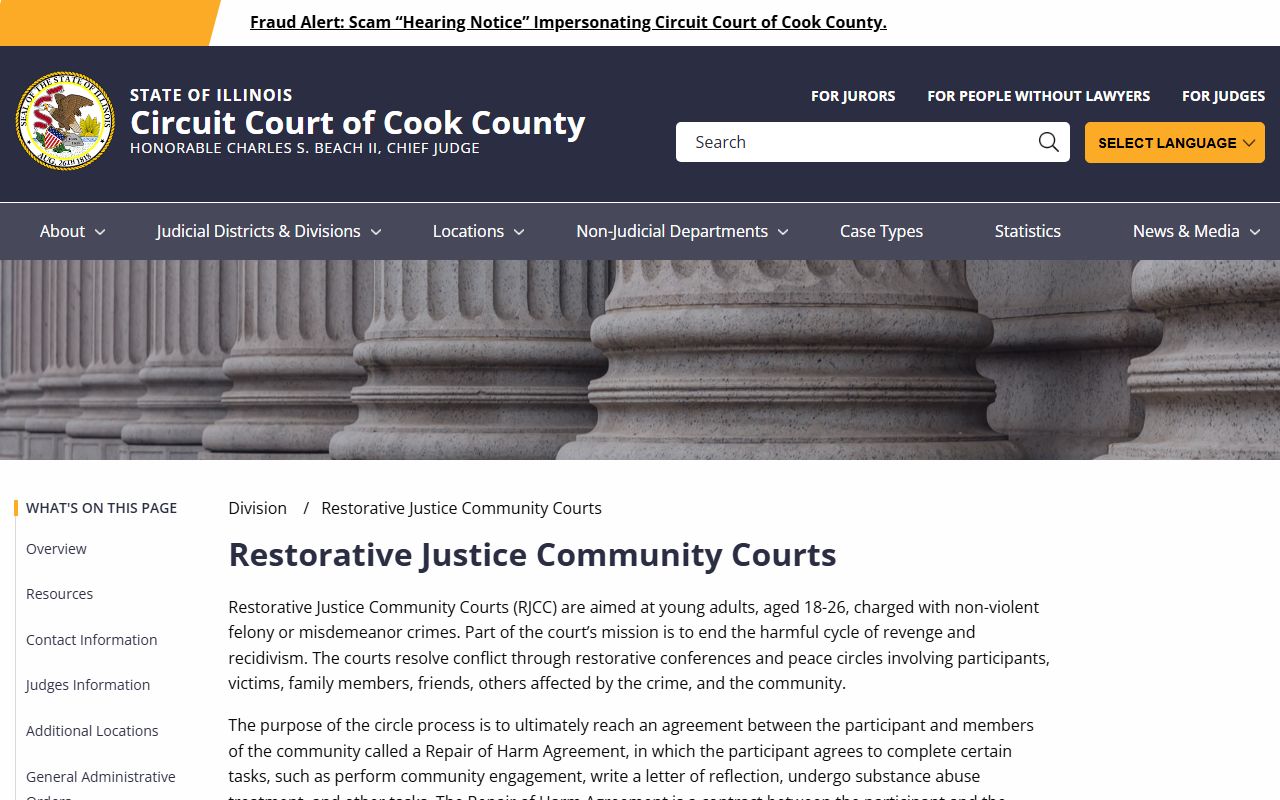
The Circuit Court runs Restorative Justice Community Courts at Avondale, Englewood, North Lawndale, and Sauk Village. The community courts handle some lower-level criminal matters through repair agreements and accountability conferences rather than ordinary plea bargaining. The Restorative Justice Community Courts page is below.
Pretrial Release After September 18, 2023
Illinois ended cash bond for new cases on September 18, 2023. Cook County courts no longer require arrested people to pay money for pretrial release in new cases. Courts decide release or detention under the pretrial system. Older cases filed before September 18, 2023 may still have cash bond requirements. The change shows up on the docket as pretrial release entries rather than bond entries.
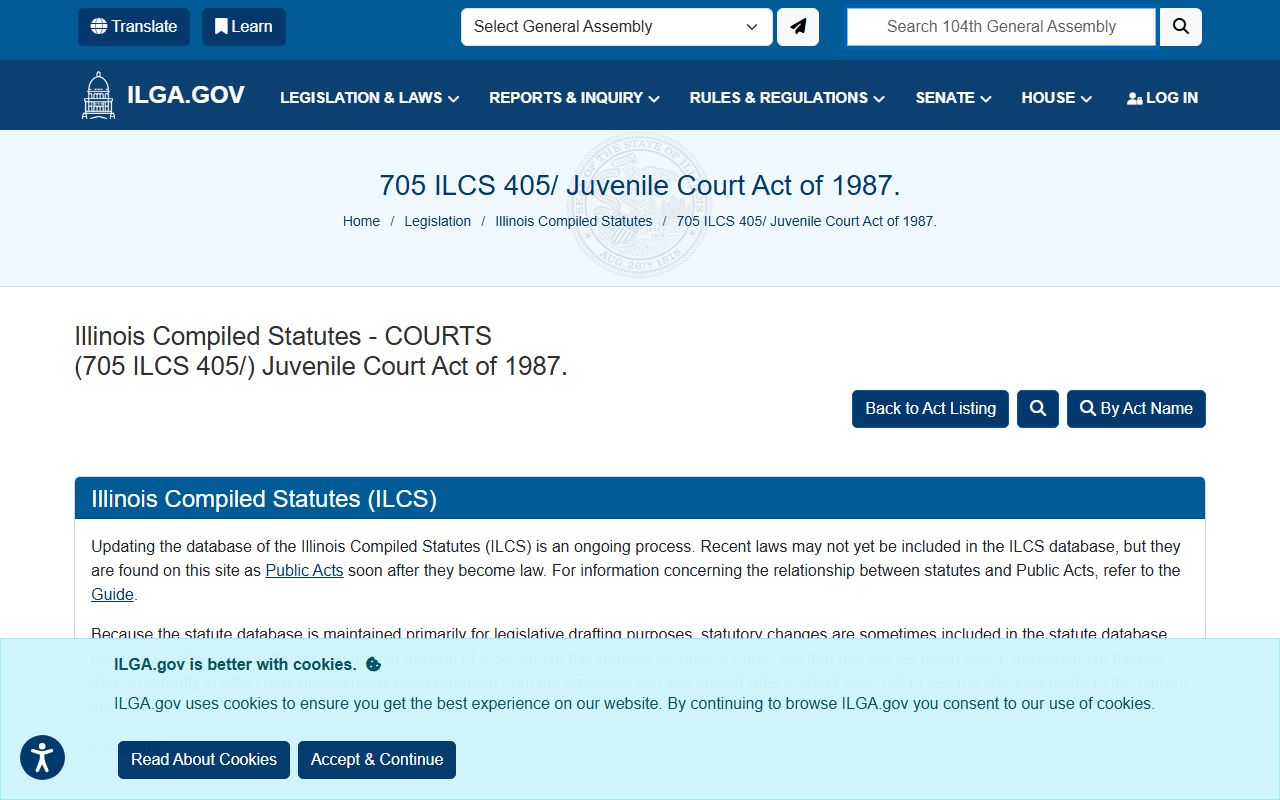
The Illinois Code of Criminal Procedure is at ilga.gov and sets out the new pretrial framework. The screenshot below shows the official statutory text.
Warrants and Holds
An outstanding warrant may appear on a Cook County criminal record. Bench warrants, arrest warrants, and out-of-state holds all affect bonding and release. The Sheriff says that if a person has a hold from another agency, bonding cannot begin until the poster is present, because the Sheriff needs additional information from that agency. For warrant detail, see Cook County warrant records.
Cook County State's Attorney and Public Defender
The Cook County State's Attorney's Office prosecutes felonies, misdemeanors, juvenile delinquency, civil matters, and appeals. State's Attorney Eileen O'Neill Burke was sworn in on December 1, 2024. The main number is (312) 603-3035 and the office website is cookcountystatesattorney.org.
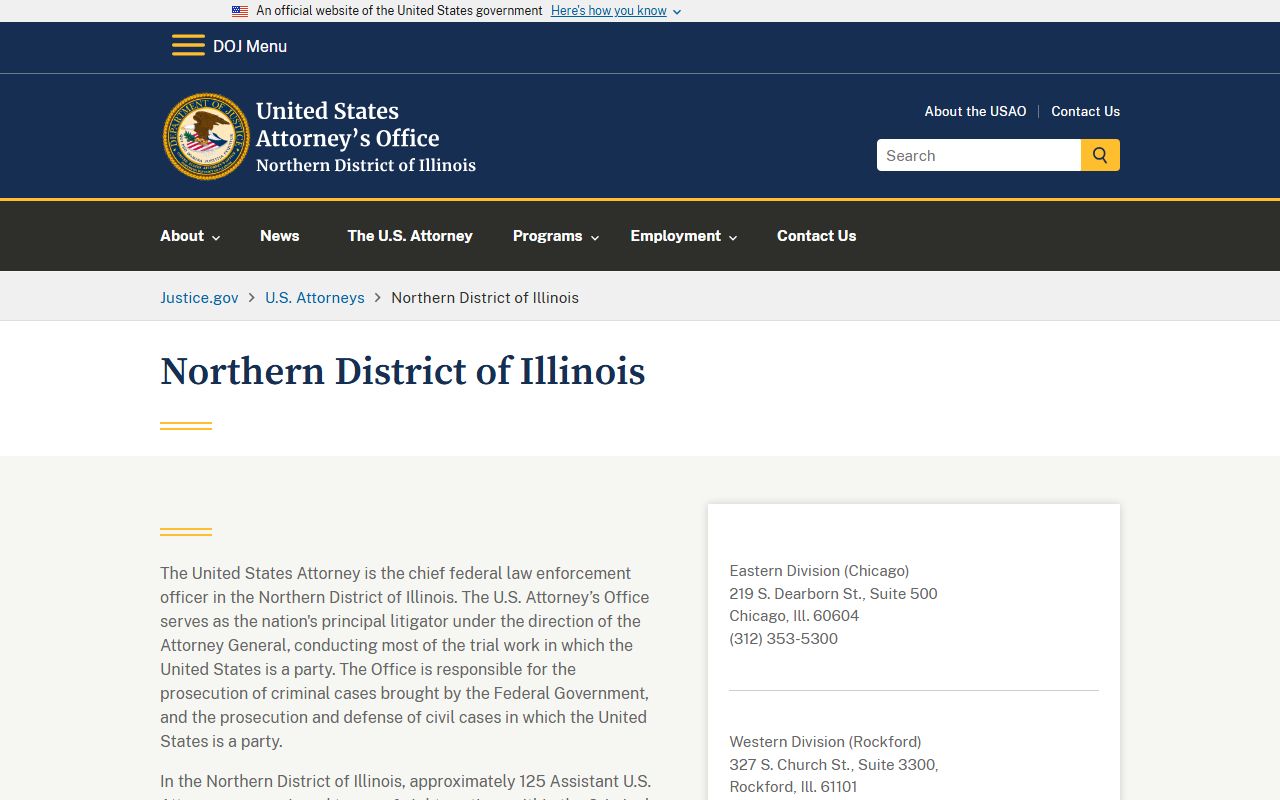
The Law Office of the Cook County Public Defender represents indigent people charged in criminal and related matters when appointed by the court. Public Defender Sharone R. Mitchell, Jr. leads the office at cookcountypublicdefender.org. The U.S. Attorney's Office handles federal charges from Cook County at justice.gov/usao-ndil; that page is shown below.
Public Access Laws for Cook County Criminal Records
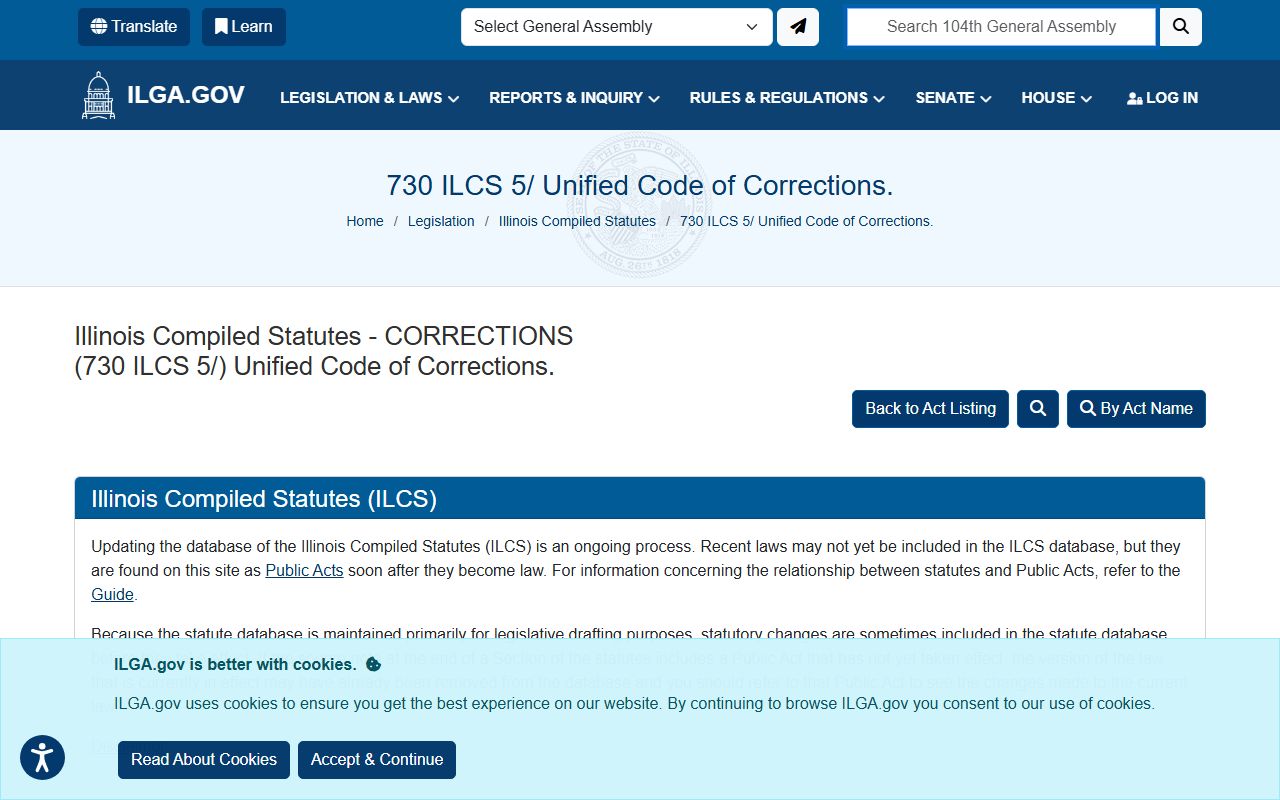
Public access to criminal court records comes from the common-law right of access, Illinois Supreme Court rules, the Clerk's policies, and the FOIA arrest-report rule at 5 ILCS 140/2.15. The Criminal Identification Act at 20 ILCS 2630 controls expungement and sealing. The Illinois Code of Criminal Procedure and the Juvenile Court Act set out which records are confidential.
The Criminal Identification Act page is captured below.
Note: Juvenile criminal records are confidential under 705 ILCS 405 and are not searchable through the public docket without statutory authority or a court order.
Grand-jury proceedings are secret under 725 ILCS 5/112-6. An indictment becomes public once it is returned and filed in the criminal case, but the underlying grand-jury testimony and deliberations stay sealed unless a court orders disclosure. That is why a felony case file can show the charge while the evidence that produced the indictment stays hidden.