
Cook County Probate Division Location
The Probate Division sits at the Daley Center. The Office of the Presiding Judge is in Suite 1803 and the courtroom is 1803. Probate phone lines include (312) 603-5943, (312) 603-7545, and (312) 603-7546. Fax is (312) 603-6721. The Clerk's Probate Division office is in Daley Center Room 1202 for case status and new estate questions, phone (312) 603-6441.
Probate Division - Office of the Presiding Judge
Richard J. Daley Center, Suite 1803
50 W. Washington St.
Chicago, IL 60602
(312) 603-7545 / (312) 603-7546
Fax (312) 603-6721
Clerk's Probate Division Office
Richard J. Daley Center, Room 1202
50 W. Washington St.
Chicago, IL 60602
(312) 603-6441
Case status, certified copies, new estate filings
Cook County Probate Case Types
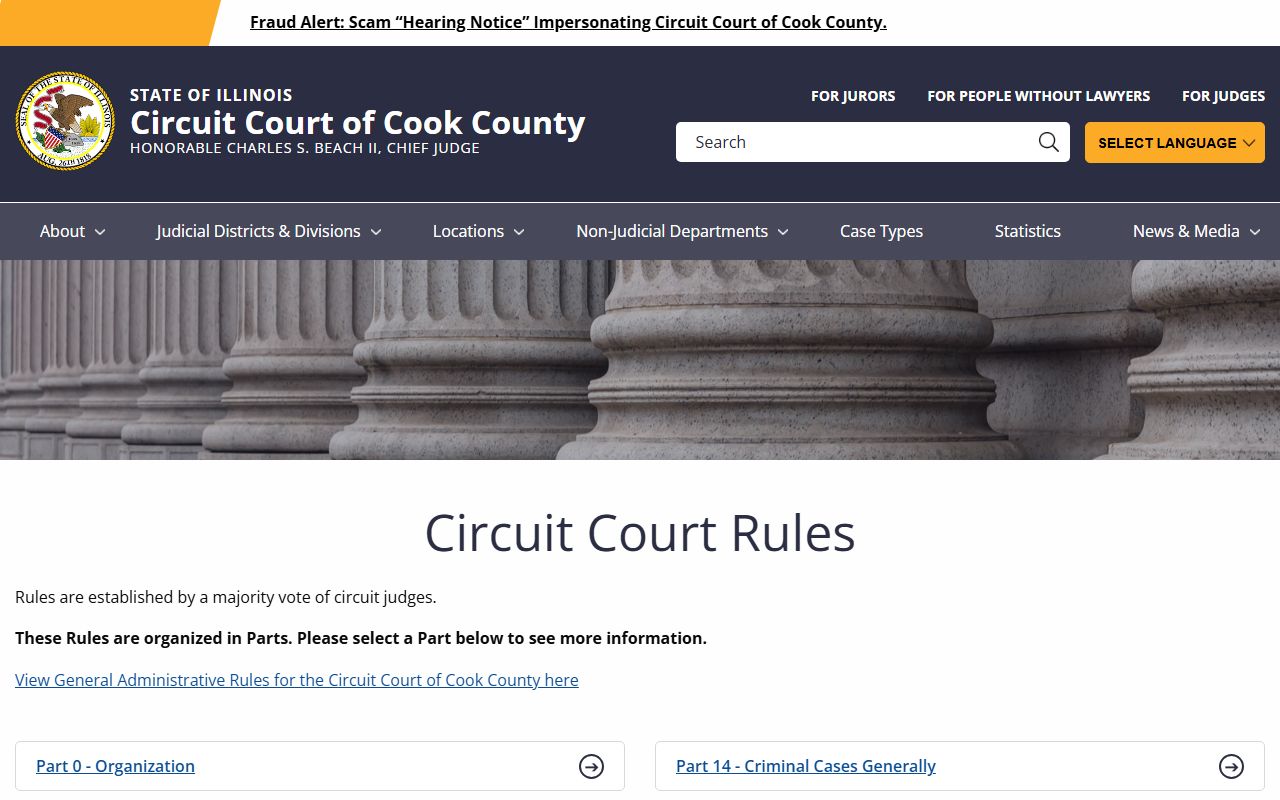
The Probate Division hears decedent estates, adult guardianship estates, and minor estates. Probate Mediation Calendar 14 serves litigants in pending probate proceedings. The Division also handles certain matters under the Illinois Power of Attorney Act and the Elder Abuse and Neglect Act, plus structured-settlement issues. Local Rules of the Circuit Court cover the procedure; the local rules page is below.
- Decedent estate with a will (testate).
- Decedent estate without a will (intestate).
- Adult guardianship of person and estate.
- Minor estate and minor guardianship.
- Citations to discover or recover assets.
- Will contests and construction.
- Power of Attorney and Elder Abuse and Neglect Act matters.
Probate Division Judges
Probate calendars are heard by a set of named judges. Cook County rotates judge assignments, but the current snapshot includes Daniel B. Malone, Circuit Judge Presiding, Courtroom 1803; Kent A. Delgado, Deputy Presiding, Courtroom 1802; Susan Kennedy-Sullivan, Courtroom 1811; Amee E. Alonso, Courtroom 1804; Daniel R. Degnan, Courtroom 1813; Jamie G. Dickler, Courtroom 1806; and Carolyn J. Gallagher, Surety Section, Courtroom 1807.
How Probate Works in Cook County
The Illinois Probate Act of 1975, 755 ILCS 5, controls Illinois probate. Some estates qualify for a small-estate affidavit and do not need a full court case. Larger estates open a court file in the Probate Division.
- Determine whether the estate qualifies for a small-estate or non-court process under Illinois law.
- File the initiating petition in the Probate Division, usually at Daley Center Room 1202 or through eFileIL.
- Present the will, if any, and request appointment of an executor or administrator.
- The court issues letters of office if appointment is approved.
- Give required notice to heirs and creditors.
- Inventory assets, manage estate property, and handle creditor claims.
- File accountings, reports, and petitions for distribution or discharge.
- Close the estate after debts, taxes, claims, and distributions are resolved.
Cook County Probate Glossary
Probate has its own vocabulary. The definitions below cover the most common terms used in Cook County probate files.
- Testator
- The person whose will is being filed in probate.
- Executor
- The person named in the will to manage the estate.
- Administrator
- The person appointed by the court when there is no will or no acting executor.
- Intestate
- Dying without a valid will. The Probate Act sets out who inherits.
- Letters of Office
- The court order showing the executor or administrator has authority to act for the estate.
- Guardianship
- A probate case to manage the person or estate of a minor or disabled adult.
- Conservatorship
- An older Illinois term sometimes used for guardianship of the estate.
- Citation to Discover Assets
- A probate motion used to compel disclosure of assets that may belong to the estate.
How to Search Cook County Probate Records
Probate dockets follow the same access pattern as other Circuit Court cases. The Clerk's online case information page exposes general status. The CCC Portal serves Illinois-licensed attorneys for probate case lookup. For an official certified copy of letters of office or a court order, file the Clerk's CCG0026 record request form or visit the Clerk's Office in Room 1202 at the Daley Center.
The Public Defender page at cookcountypublicdefender.org covers indigent defense generally; probate cases involving adult or minor guardianship sometimes interact with public-defender appointments. The Public Defender home page is below.
Cook County Probate Fees
The Clerk's fee schedule lists a $2 fee for a certified copy of letters of office, court orders, or other probate certifications. Statutory filing fees are governed by the Clerks of Courts Act at 705 ILCS 105/27.2A. Specific opening fees vary by estate value and case type, so confirm with the Clerk's Probate Division office at (312) 603-6441 before filing.
| Item | Amount |
|---|---|
| Certified copy of letters of office or court order (Probate) | $2 |
| Record search fee | $6 per year searched |
| Plain copy, first page | $2 |
| Plain copy, each additional page | $0.50 |
| Other probate filing fees | Confirm with Probate Clerk; statutory under 705 ILCS 105/27.2A |
Daley Center Probate Location and Map
The Daley Center sits at 50 W. Washington Street in the Loop.
Small Estates and the Surety Section
Not every Cook County estate needs a full probate case. Illinois allows a small-estate affidavit for estates under the statutory threshold with no real estate and no contest. The affidavit lets an heir collect and distribute property without opening a court file. Larger estates, contested estates, and estates with real estate usually need a formal probate case in the Probate Division.
The Probate Division includes a Surety Section, handled in Courtroom 1807. A surety is a bond that protects the estate if the executor or administrator mishandles assets. The court can require a surety bond before issuing letters of office, especially when the representative is not a resident or when the will does not waive the bond.
Probate Mediation Calendar 14 offers mediation for litigants in pending probate proceedings, which can resolve will contests and guardianship disputes without a full trial.
Probate Self-Help and Legal Aid
The Probate Division page expressly notes resources for people without lawyers. Illinois Legal Aid Online at illinoislegalaid.org publishes probate, guardianship, and estate self-help. CARPLS, Legal Aid Chicago, and Chicago Volunteer Legal Services help eligible Cook County residents with probate questions. The Chicago Bar Association lawyer referral service can match a non-eligible client with a probate attorney.
Note: Probate is fact-specific and small mistakes can delay distribution. Consult an attorney before filing if the estate involves business interests, contested wills, or multiple beneficiaries.